EN
EN
 EN
EN AR
AR DA
DA NL
NL FI
FI FR
FR DE
DE EL
EL HI
HI IT
IT JA
JA KO
KO PL
PL PT
PT RU
RU ES
ES SV
SV IW
IW ID
ID SK
SK UK
UK VI
VI TH
TH TR
TR MS
MS KK
KKSolid-State Batteries Drive Demand for High-Range Equipment: XJCSENSOR Steps Up
Date: 2025-11-17 Views: 2791 Author:



Table of Contents
Sensing the Pulse of Solid-State Battery Production Through ForceSolid-State Batteries Spur "High-Range" Equipment NeedsSolid-State Batteries Push Innovation in Force SensorsEmpowering Lithium Battery ProductionFor more detailed product information, please visit our official website
The industrialization of solid-state batteries is entering a substantial phase. Recently, leading companies like Gotion High-tech, EVE Energy, and Sunwoda have announced progress regarding related solid-state products and pilot production lines. While the exact timeline for mass production across the industry remains uncertain, pilot lines serve as the crucial testing ground. It is here that numerous engineering challenges are finding their solutions.
A key bottleneck involves the solid-solid interface issue. Different companies are pursuing unique technological breakthroughs to address this, which in turn is driving the testing and application of many innovative components.
The root cause lies in the rigid contact between the solid electrolyte and the electrodes, which creates numerous voids. These voids can trigger severe side reactions, leading not only to subpar performance but also significant safety concerns.
Applying high pressure during manufacturing helps eliminate these interfacial voids and increases the effective contact area. This compression process also optimizes the microstructure of the solid electrolyte. Employing higher-range thermal pressure is key to unlocking superior performance in solid-state batteries, paving the way for higher energy density and longer cycle life.
Sensing the Pulse of Solid-State Battery Production Through Force
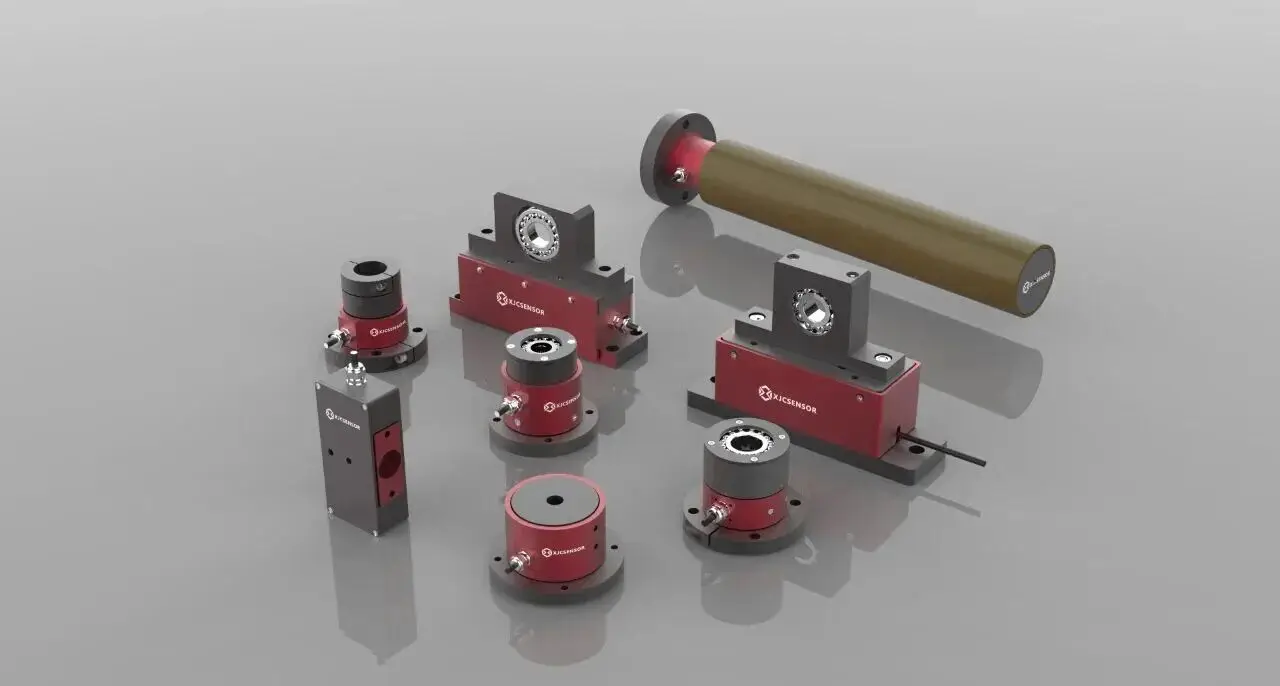
Responding to the production challenges of solid-state batteries, XJC Sensors, a leading force measurement sensor manufacturer, has developed innovative products like flat pressure sensors and piezoelectric force sensors. These are being applied in processes such as rolling, and cold/hot pressing, effectively tackling the engineering hurdles of solid-state battery manufacturing.
Mr. Wu Hao, Chairman of XJC Sensors, stated that future solid-state battery production will create definite market demand for compaction force measurement. Notably, the company's flat pressure sensors have already achieved significant delivery volumes this year, earning recognition from major industry players.
Currently, the solid-state battery supply chain is focused on transitioning from initial capability to refined excellence. As mass production truly approaches, the demands for precise force control and higher force ranges will only intensify. XJC Sensors is committed to continuous collaboration within the industry chain to solve the intricate details of solid-state battery production.
Solid-State Batteries Spur "High-Range" Equipment Needs
Compared to liquid batteries, the most significant improvement in solid-state batteries is their higher energy density. The use of solid electrolytes also necessitates adjustments in certain manufacturing processes and techniques.
Particularly critical is the coordination between the solid electrolyte and electrodes. Lamination requires greater pressure to achieve a high compaction density and proper interfacial contact. This ensures structural stability and significantly improves contact between the active material particles and the electrolyte, thereby enhancing battery capacity utilization and current distribution uniformity.
Due to these performance enhancements, the required force measurement ranges have also increased. The flat pressure sensors from XJC Sensors can be connected in series to achieve high-range detection. They offer excellent resistance to eccentric loads and bending moments, ensuring rolling accuracy and uniformity.
In terms of parameters, older equipment for liquid batteries typically required force ranges of 10-15 tons. Current needs for solid-state processes have risen to 30-45 tons. As solid-state batteries become more widespread, force ranges are inevitably heading towards over 100 tons. It's worth highlighting that XJC Sens ors' flat pressure sensors already offer a range capability of up to 200 tons.
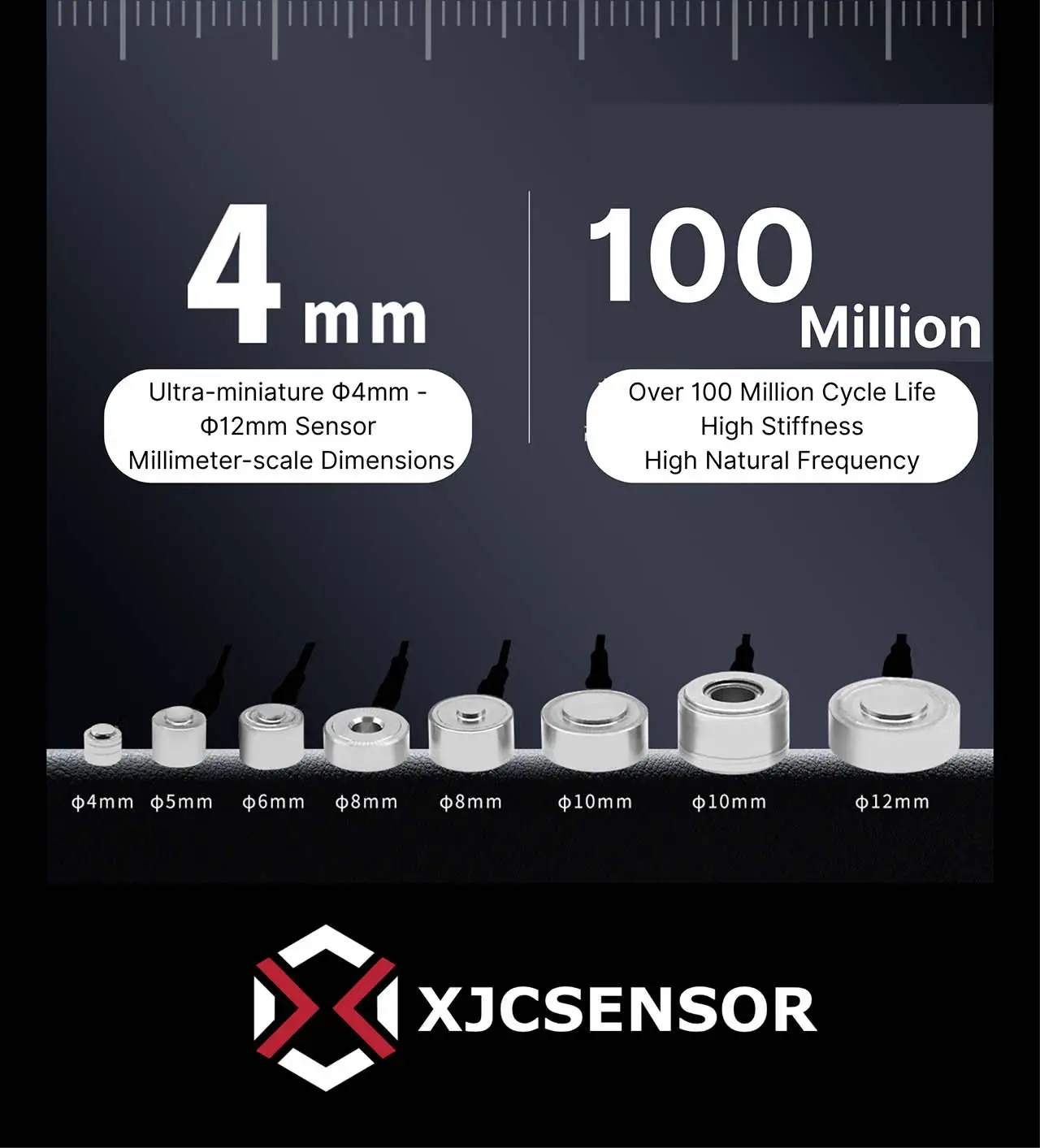
From another perspective, XJC's 200-ton flat pressure sensor is also a powerful tool for maintaining high production throughput.
Even though most solid-state battery production lines are still in the pilot stage, the pursuit of high production throughput cannot be neglected. High throughput helps optimize the allocation of equipment, materials, and human resources, making it key to ensuring production consistency, reducing costs, and improving efficiency.
A more pragmatic factor is that even when battery manufacturers achieve mass-production capability, low production throughput would render them unable to meet market demand. Therefore, higher-range sensors are essential for enabling the high-throughput production necessary for solid-state batteries.
Solid-State Batteries Push Innovation in Force Sensors
How can components and equipment throughout the lithium-ion battery production process use "precision force" to enhance manufacturing accuracy and stability? For production equipment, sensors act like nerves in the human body, providing the crucial sense of touch. They detect changes in production data across various stages by monitoring variables related to force.
Solid-state batteries, often considered the ultimate form of lithium batteries, are now at a critical juncture, driving innovation in processes and equipment across the production line. This includes dry processes, adhesive coating/lamination, and isostatic pressing.
Similarly, for the crucial rolling process, traditional tension sensors are inadequate for detecting the higher ranges and greater force values required. In response, XJC Sensors developed piezoelectric force sensors. These offer higher rigidity, high-frequency response, and can be made in smaller sizes with larger measurement ranges, enabling faster output.
Furthermore, XJC Sensors has collaborated with clients on developing roller shells with built-in piezoelectric sensor arrays. The uniform arrangement of these sensors allows for real-time monitoring of force distribution and lamination status as the material passes through the rollers, truly empowering the production of solid-state batteries using dry processes.
Empowering Lithium Battery Production
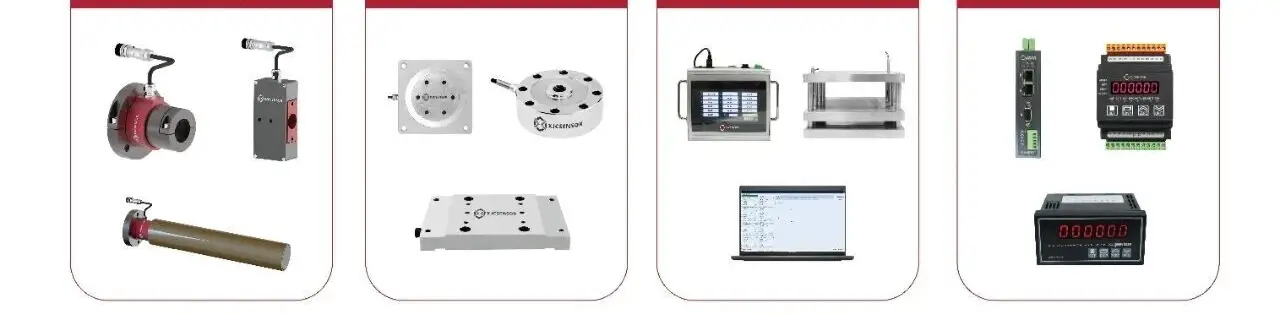
Beyond these innovations, XJC Sensors also offers a range of other products for lithium battery production, including narrow-width, cantilever, and flange-style tension sensors applicable to winding machines, stacking machines, coaters, and slitters.
Their pressure sensors are suitable for hot/cold presses and formation machines.
The company also provides pressure monitoring controllers for data acquisition and transmission, featuring options like pressure limit level output, digital, and analog outputs. An expansion force analysis system detects the swelling force of lithium batteries during charge/discharge cycles, enabling safety warnings by acquiring data on expansion force, displacement, voltage, current, and temperature.
For more detailed product information, please visit our official website
XJCSENSOR | Advanced Force Sensor, Torque Sensor, Load Cell Supplier, Manufacturer or contact our sales team immediately.
Founded in 2009, XJCSENSOR is a leading manufacturer of force sensors and force-control solutions. Our portfolio covers miniature pressure, weighing, multi-axis force, and torque sensors, as well as customized designs and integrated force-control systems.
Recommended
Next-generation multi-axis sensor for precision robotic applications

How Six-Axis Force Sensors Elevate Lithium Battery Handling Robots: Breaking Through Key Challenges
Solid-State Batteries Drive Demand for High-Range Equipment: XJCSENSOR Steps Up
6-Axis Force/Torque Sensors: Accelerating the Development of Humanoid Robots
Copyright ◎ 2025 XJCSENSOR